
Categories
First Time Home Buying, Flipping, Real Estate Tips, Loss Mitigation, Rent vs BuyPublished March 13, 2026
The San Antonio Housing Squeeze: When Owners Can’t Sell and Rent Won’t Cover

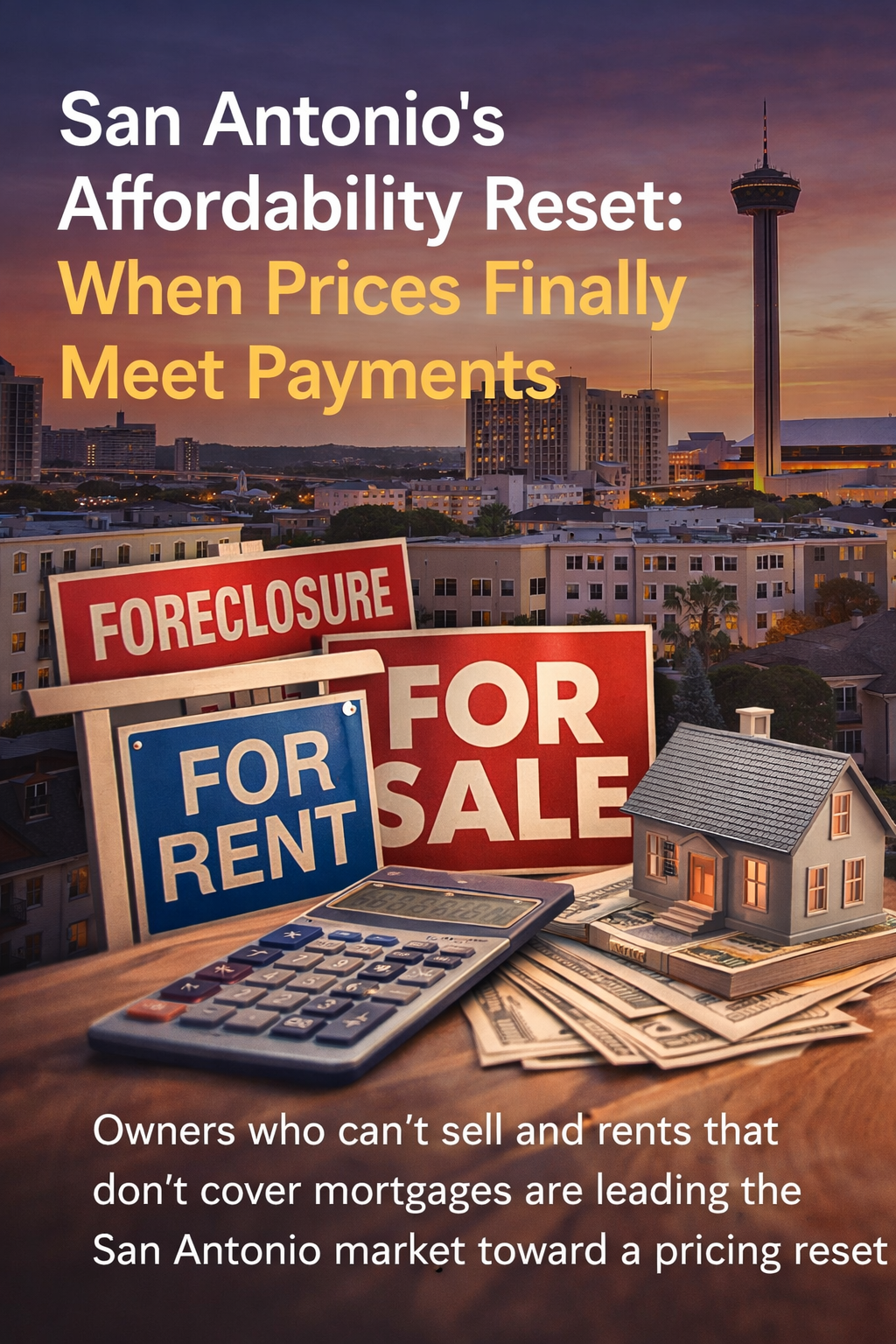
The conversation around housing affordability in San Antonio is often framed around a few familiar ideas. Many believe the solution will come from builders increasing supply. Others are waiting for interest rates to fall. Some hope property tax relief or insurance reform will ease the cost of ownership.
But none of those forces are likely to solve the affordability problem in the near term.
The reality is that affordability in San Antonio will most likely return through the market itself.
Recent data from the San Antonio housing market paints a clear picture of where we are today. The average home price in the city sits around $360,124, while the median price is roughly $299,900. Homes are now taking about 102 days to sell, and the market is sitting at 5.51 months of inventory, signaling a noticeable shift away from the frenzy of the pandemic years.
That same data shows another important trend: inventory is rising. There are now over 15,000 active listings across the market and nearly 4,800 active residential rental listings, both increases compared to last year.
Those numbers tell a deeper story about what is happening beneath the surface.
Between 2021 and 2023, San Antonio experienced one of the fastest price escalations in its housing history. Low interest rates, strong migration into Texas, and limited housing supply drove prices upward at a pace that many buyers could barely keep up with.
The problem is that those prices were built on conditions that no longer exist.
Interest rates today are dramatically different than they were during the pandemic housing surge. Buyers who could once afford a $350,000 home at 3 percent interest are now facing mortgage payments hundreds of dollars higher at today’s rates. Waiting for interest rates to return to those levels is unrealistic in the near term.
Builders are not likely to be the solution either.
While San Antonio continues to see construction on the outskirts of the city, developers are primarily competing through incentives rather than dramatically lowering prices. Many builders today are offering interest rate buy downs, closing cost assistance, and upgrades to attract buyers. These incentives allow them to sell homes without publicly reducing prices.
In many cases, buyers can now purchase a brand-new home with incentives that make the effective monthly payment lower than a resale home priced during the peak years of the market.
That creates pressure on the resale market.
But the real pressure point is something else entirely.
There are homeowners across San Antonio who purchased properties during the peak pricing window and now find themselves in a difficult financial position. They may not be able to sell for what they hoped. They may not be able to refinance into a lower payment. And when they attempt to rent the property, the market rent often does not cover the mortgage.
The average residential rent in San Antonio today sits around $1,767 per month, which in many cases is not enough to offset a mortgage payment on a home purchased at peak pricing.
That is where the market begins to apply pressure.
Some homeowners will attempt to rent their homes and wait out the market. Others will lower their asking price in order to sell. In some cases, we begin to see the return of distressed transactions such as short sales and foreclosures.
At the same time, the growing number of rental listings increases competition in the leasing market. As rental supply grows, rents face downward pressure.
Lower rents then create a second wave of pressure on investors and accidental landlords who depend on rental income to support their mortgage payments.
Meanwhile, builders continue to compete aggressively for buyers using financing incentives that individual homeowners simply cannot match.
The result is a slow market adjustment.
It rarely happens overnight. Instead, the correction occurs through longer days on market, increased concessions, investor purchases, distressed sales, and growing rental supply.
San Antonio is not facing a collapse. The city still benefits from strong population growth, military presence, healthcare expansion, and continued job creation. But affordability will not return simply because people hope it will.
Affordability returns when prices align with what buyers can realistically pay under current financing conditions.
And in markets like San Antonio, that alignment often happens through the quiet forces of supply, pressure, and competition.
Not policy.
Not predictions.
Just the market doing what it has always done.
|


or another way