
Categories
First Time Home BuyingPublished March 12, 2026
Inner Westside San Antonio

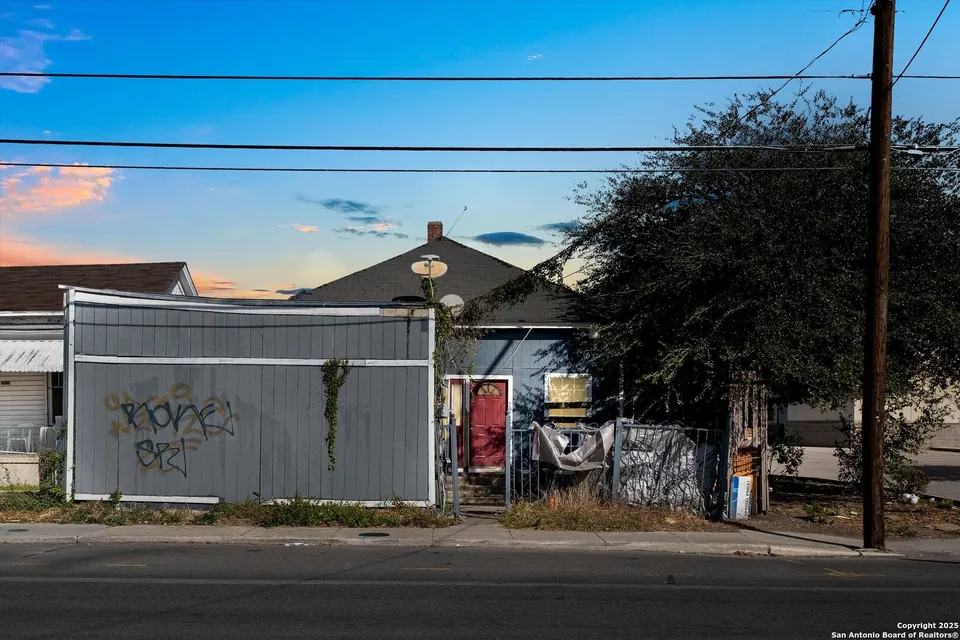
I grew up on the inner West Side of San Antonio. Edgewood ISD. The part of town people talk about in statistics now, but back then it was just where we lived. Small houses, families that had been on the same block for generations, people who worked hard and helped each other when things got tight.
Nobody walked around saying we were poor. It wasn’t labeled like that. It was just everyday life.
My first job was at Fred’s Fish Fry. Like a lot of kids from the West Side, you learn early what work looks like. Long hours, small paychecks, figuring things out as you go. That kind of environment teaches you something that never really leaves you. You learn that hard work isn’t optional. It’s survival.
As I got older and eventually entered real estate, my perspective started to change. I’ve spent about 25 years in this business now. Long enough to understand how markets move, how property values grow, and how communities either attract capital or get left behind. In this industry you learn quickly that real estate is not just about houses. It’s about access. Access to credit. Access to capital. Access to opportunity.
Those things shape neighborhoods more than people realize.
Looking back now, I can see the neighborhood I grew up in through a different lens. The inner West Side sits in what many studies describe as one of the most economically distressed zip codes in the country. 78207. The area not far from Haven for Hope and the Bexar County jail system. Two institutions that exist for important reasons but also shape the economic gravity of the surrounding neighborhoods.
When you grow up there, you don’t think about things like economic distress or urban policy. You think about school, family, and trying to carve out a future. The houses may have been older and the infrastructure not always perfect, but it was home. People took pride in what they had even when the rest of the city didn’t always notice.
There’s a moment when you know you’ve entered the West Side. It’s subtle if you’re not from there, but obvious if you are.
The power lines start to scatter across the sky. Not neatly tucked away or buried underground like in newer parts of the city, but stretched from pole to pole across the blocks. They hang over the streets and the homes in a way that tells you the infrastructure here was built in another time.
And then the streets stop having names.
They turn into numbers.
West Commerce. West Houston. And then the numbered streets begin. First, second, third, fifth, tenth. A grid that feels older than the rest of the city. If you grew up there, those numbers mean something. They aren’t just navigation points on a map. They’re markers of neighborhoods, of memories, of entire communities built block by block.
Working in real estate has given me a different vantage point. I hear the conversations about redevelopment and revitalization. Investors talk about opportunity. Developers talk about transformation. Politicians talk about investment.
But the West Side isn’t a blank piece of land waiting for someone to draw a new future on it.
It’s layered with generations of economic reality.
People often frame the West Side’s challenges as housing issues. Older homes. Lower property values. Lack of development. Those things are visible, but they’re only the surface.
The deeper issue has always been concentrated poverty.
When poverty becomes concentrated geographically, it shapes everything around it. Schools operate with smaller tax bases. Businesses hesitate to invest because local spending power is limited. Property values move slower because appreciation requires economic support from the surrounding environment.
None of that has anything to do with the character of the people living there. Anyone who grew up on the West Side knows the work ethic that exists in those neighborhoods. Families grinding every day to move forward. Pride in community. Pride in culture. Pride in history.
But culture alone doesn’t move economic gravity.
San Antonio often celebrates the West Side culturally. Murals, heritage, stories about the historic heart of the city. That pride is real and deserved. But cultural recognition and economic mobility are two very different conversations.
Sometimes the city talks about one while avoiding the other.
In real estate you start to see patterns. Where capital flows. Where it avoids. How credit availability shapes who can buy, who can invest, and who builds wealth through property ownership. Access to capital and access to credit quietly determine which neighborhoods grow and which ones struggle to keep up.
That reality doesn’t show up in development brochures.
Drive north in San Antonio and the expansion is obvious. New construction, corporate investment, large developments spreading across the landscape.
Drive west into the inner neighborhoods and the pace feels different. Homes that have stood for generations. Families holding onto property that has been passed down through time. Blocks that have watched the rest of the city grow around them.
It can feel like two different San Antonios existing inside the same city.
Growing up on the West Side, none of that analysis mattered. You were just living life in the environment you knew. But after spending years in real estate, studying markets, understanding lending, credit, and investment cycles, the patterns become hard to ignore.
This isn’t a piece about offering solutions.
Because the truth is the issues run deeper than that.
They’re deeper than redevelopment language. Deeper than policy announcements. Deeper than the kind of optimistic narratives that often show up when cities talk about transformation.
The West Side isn’t a concept or a case study.
For many of us, it’s simply where we came from.
It’s where we learned how to work. Where families built lives with whatever resources they had. Where pride in community existed even when the outside world only saw statistics.
I still love the West Side.
But loving a place also means being honest about it.
The challenges there didn’t happen overnight. They were shaped over decades by systems that go far beyond what can be explained in a simple redevelopment plan.
And some realities are deeper than pretty words written on paper.
|


or another way