
Categories
Loss Mitigation, First Time Home Buying, Real Estate TipsPublished March 9, 2026
From Foreclosure to Bank Owned: Understanding the Process

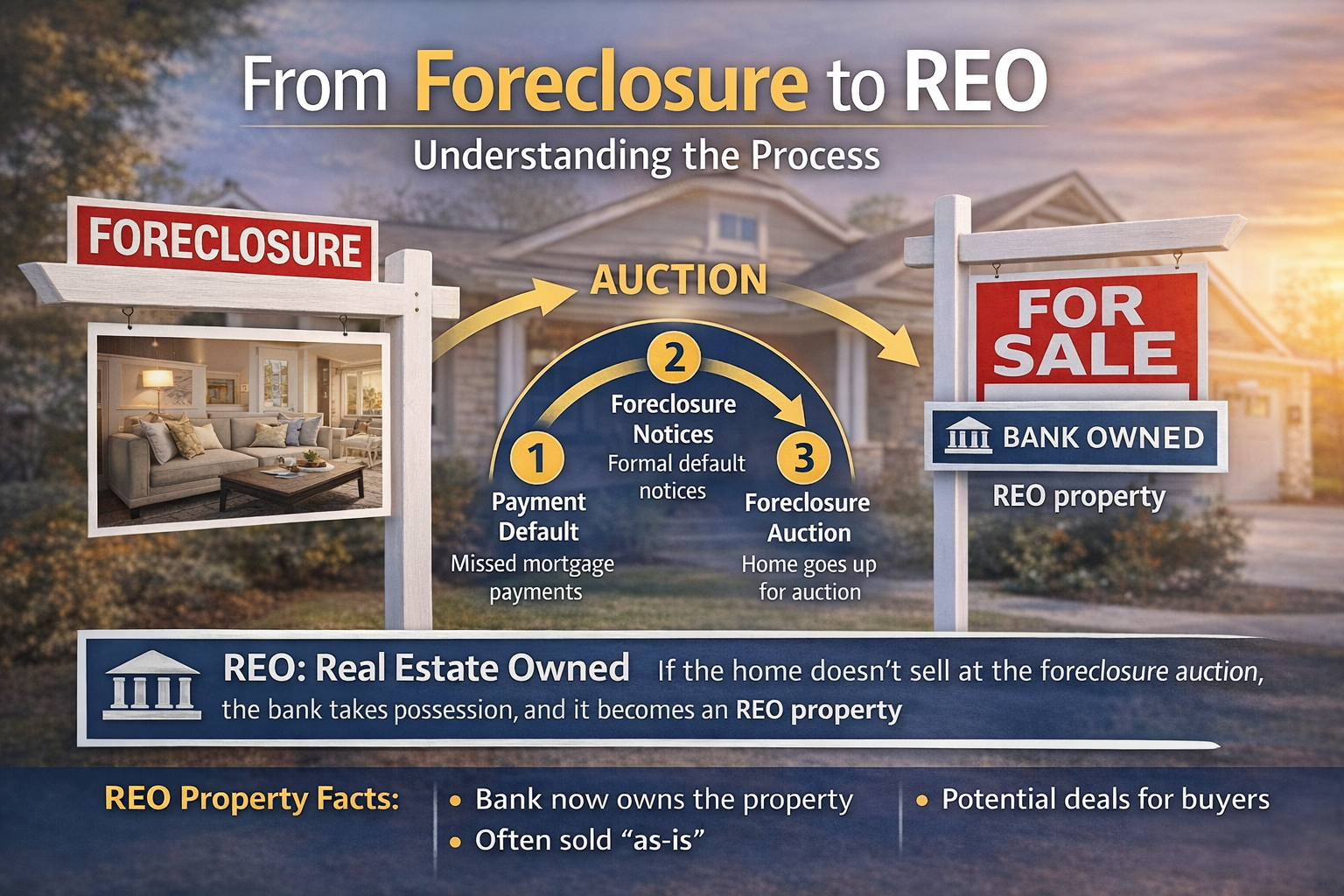
From Foreclosure to REO: Understanding the Process
When a homeowner falls behind on mortgage payments, the lender has the legal right to begin the foreclosure process. Foreclosure is the procedure a lender uses to recover the remaining balance of a loan by forcing the sale of the property used as collateral.
Understanding how a foreclosure becomes an REO (Real Estate Owned) property helps buyers, investors, and real estate professionals recognize opportunities in the market.
What Is Foreclosure?
Foreclosure begins when a borrower fails to make mortgage payments according to the loan agreement. After several missed payments, the lender issues formal notices and eventually schedules the property for a foreclosure auction.
The goal of the lender is to recover the unpaid loan balance.
Steps in the Foreclosure Process
1. Payment Default
The borrower falls behind on mortgage payments, typically after 90 to 120 days of delinquency.
2. Notice of Default or Acceleration
The lender formally notifies the borrower that the loan is in default and must be brought current.
3. Foreclosure Sale (Auction)
If the borrower cannot resolve the debt, the property is scheduled for a foreclosure auction, often held at the county courthouse.
Investors and buyers may bid on the property at this stage.
When a Property Becomes REO
If no buyer bids enough to cover the lender’s required amount at the auction, the property does not sell. At this point, the lender takes ownership of the property.
The home then becomes REO, or Real Estate Owned, meaning the bank now owns the property.
What Happens After a Property Becomes REO?
Once the bank takes possession, it typically:
- Clears any outstanding liens when possible
- Secures and maintains the property
- Assigns the property to an asset manager
- Lists the property with a real estate broker for sale
REO properties are usually sold through traditional real estate listings and are often marketed to both investors and owner-occupant buyers.
Why This Matters for Buyers and Investors
REO properties can present opportunities because lenders are often motivated to sell these homes and remove them from their books. However, they are typically sold as-is, and buyers should perform proper inspections and due diligence.
Final Thought
The transition from foreclosure to REO is part of the broader real estate cycle. While it begins with financial hardship for a homeowner, it also creates opportunities for buyers and investors who understand the process and are prepared to navigate it effectively.
|


or another way